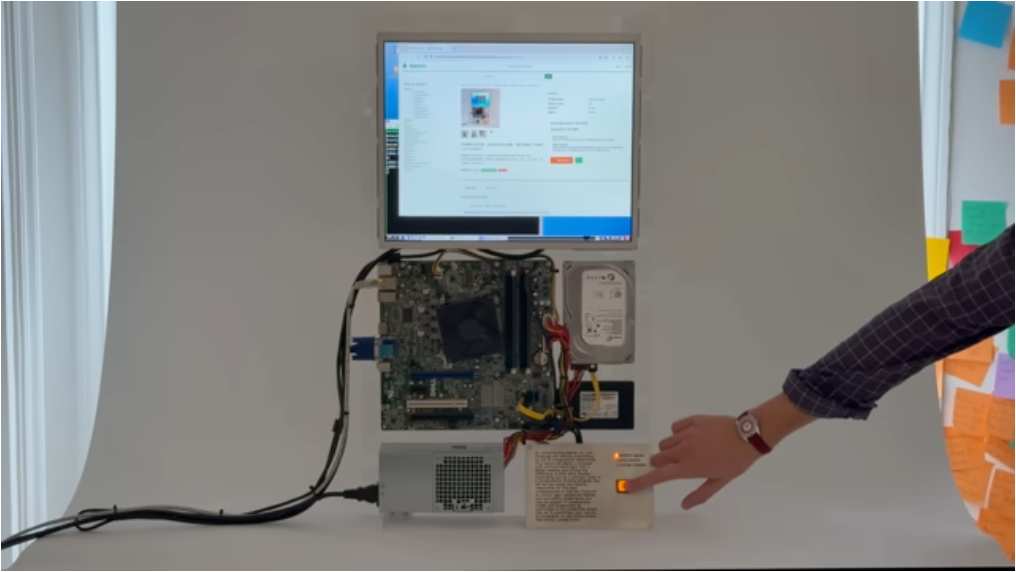
In its dormant state, the work is a sculpture of exposed computer hardware, meticulously arranged on a transparent sheet of plexiglass. The piece is inert until a viewer chooses to interact with the engraved aluminum panel, which contains a single button and a text outlining the severe legal ramifications of its use:
By activating this device, you are knowingly and willfully committing an act of transnational cybercrime. Your action will deploy a purpose-built criminal instrument onto a global network and initiate the trafficking of illicit data, thereby implicating you as a principal actor in a transnational criminal scheme. You will be held solely and directly responsible for the legal consequences of this act. Pursuant to mutual legal assistance treaties and extradition agreements, you may be subject to investigation, arrest, and prosecution by authorities in the jurisdiction where this act is committed, your country of citizenship, or any nation where this activity causes harm.
La création d'un domaine .onion étant versatile il est facile d'en créer à la volée. Pour rappel, ni le client ni l'index des adresses .onion ne connait l'adresse IP de destination (du serveur). L'adresse générée est ratachée à l'adresse IP est mise à jour dans le Directory (index équivalent d'un DNS). Aussi, pas même besoin de mettre à jour un registre DNS, car l'acces au serveur passe par un point de RDV. On peut donc générer des adresses à la volée. On utilisera par exemple : https://github.com/aurelg/ephemeral-hidden-service qui génère une nouvelle adresse et affiche (sert) le contenu qui passe par un port donné : un site web, une interface.